
New case study explains how Genesee County Drain Commissioner - Water & Waste Services solved their slow radio polling communication problem over 600 square miles.
Communication breakdowns in industrial systems aren’t just frustrating—they’re costly, disruptive, and often difficult to diagnose.
The Genesee County Drain Commissioner Division of Water & Waste Service (GCDC-WWS) in Michigan struggled with the communication slowdowns in their legacy radio polling system. Poor alarming meant operators could not reliably fine-tune the pumping stations. With 180 remote sites across 600 square miles, these delays became unacceptable.
This new case study shows you how they solved the problem.
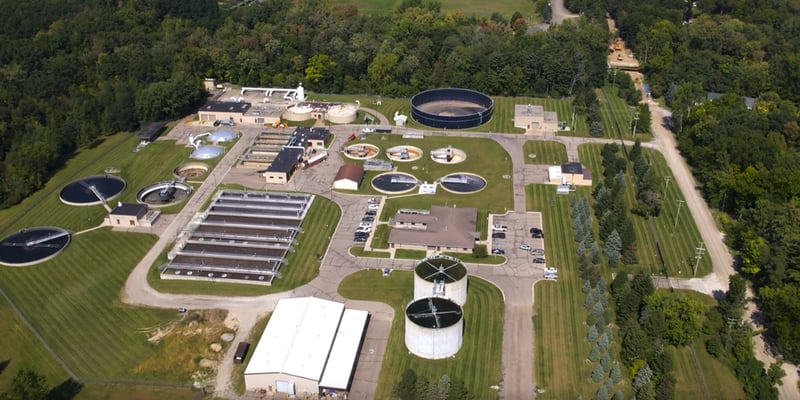
When you start a remote pump, you expect to know right away whether it actually turned on. In the Genesee County Drain Commissioner Division of Water & Waste Services’ legacy radio polling system, that confirmation could take four to five minutes.
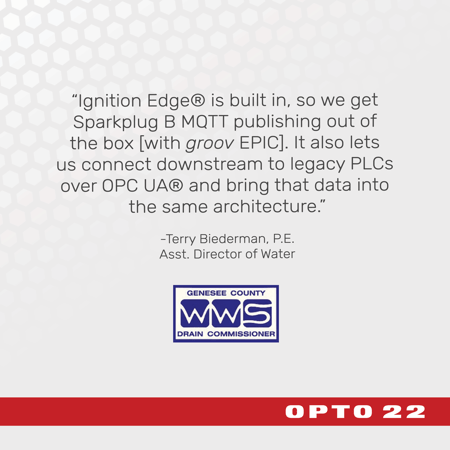
It was time for a more resilient, scalable system that restored confidence in critical communications. With the leadership of Terry Biederman, GCDC-WWS Assistant Director of Water, an edge-based control system became the goal.
Based on experience with previous projects, Terry began evaluating a different model built around Sparkplug B MQTT publish/subscribe communication versus the legacy polling model.
Read the complete case study to learn:
- Why traditional architectures broke down
- What problems edge devices solved
- How a scalable system led to cost savings
You'll get a practical blueprint for moving legacy communication systems to a real-time data architecture.

You can also download your own PDF copy of this case study.
Visit our Case Study library for more application success stories featuring groov EPIC and groov RIO.
Do you have an application you'd like to share? Learn more about our Case Study Program and how it can help set you apart as an industry expert.