
The 4.1 groov firmware release is now available and offers more control, greater security, and fewer barriers.
If you use, or plan to use, groov hardware, this update improves what you can do without adding hardware, software licenses, or external tools.
And it’s available for every groov EPIC and groov RIO device ever shipped!
Firmware 4.1.0 adds key features: network segmentation on groov RIO, serial integration inside CODESYS without licensing, and API-driven fleet management tools.
Here is what changed, and why each change is worth your attention.
Segmented Ethernet interfaces on groov RIO (this is a big one!)
Previously, groov RIO's two Ethernet ports operated as a two-port switch. Both ports shared a single IP address on the same network, which was useful for daisy-chaining devices. But that meant all Ethernet traffic was on a single subnet.
groov EPIC, on the other hand, has always had independent, segmented Ethernet ports. And many customers have requested the same for groov RIO. So, we've responded. But what's better? You can take advantage of this new segmented Ethernet functionality on your existing RIOs with this firmware update!
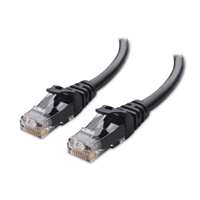
Now, using groov Manage on your groov RIO (all versions—MM1, MM2, and EMU), you can configure the two Ethernet ports to be in switched mode (factory default), or optionally in segmented mode. In segmented mode, each port gets its own IP address on its own network. One connects to the OT or machine network, the other connects to the IT or plant/enterprise network. No traffic routes between them.
This also opens up remote architectures for groov RIO. You can dedicate one port to local control/field devices and the other port to a cellular modem, Starlink terminal, or satellite link, giving you secure, isolated upstream connectivity without exposing your machine network.
RSTP Support in Switched Mode
If you are still operating your groov RIO in switched mode, wiring your Ethernet switches to the same network or in a ring topology can provide cable redundancy, but it can also cause a problem: frames can circulate endlessly and flood the network. That's a broadcast storm, and it can take down a network segment.
Rapid Spanning Tree Protocol (RSTP) prevents it. RSTP detects the loop, blocks one path, and keeps the other active. If the active cable fails, the backup is unblocked, typically within a second.
groov RIO in switched mode now supports RSTP. You can wire RIO into a redundant ring topology, and if a cable gets cut, traffic reroutes automatically. Every switch in the loop needs to support RSTP for this to work, and it only applies in switched mode (in independent mode, the ports aren't bridged, so there's no loop to manage).
See the updated networking guide (form 2161) for more information.
CODESYS Runtime v3.5.21.40—with Modbus RTU Client Included
The CODESYS runtime is now v3.5.21.40.
The headline change: the Modbus RTU Client is now included for FREE in the runtime, no separate license required. If you integrate serial devices, variable frequency drives, power meters, and other legacy instrumentation that uses serial Modbus, you can now communicate with them directly inside CODESYS without an additional purchase.

Update your IDE to the v3.1.3.0 Opto 22 Library Package to stay in sync with the new runtime.
Note: As with the 4.0 update, CODESYS users should back up their license before updating. Check out KB91189 for the how-to.
Node-RED 4.1.3 and Dashboard 2.0 Support
Node-RED has been updated to v4.1.3, with the underlying Node.js runtime updated as well (v22.22.0). This version supports Dashboard 2.0 for building modern browser-based interfaces while still allowing Dashboard 1.0 to run alongside it if you choose.
If you build HMIs, edge data flows, or protocol translation logic in Node-RED, you now have access to the latest runtime and UI tooling without breaking your existing flows.
REST API for Firmware Updates, Backup, and Restore
The REST API now supports automated firmware updates, backup and restore operations, and API key retrieval through a login endpoint. If you manage more than a handful of groov devices, this update saves you real time.
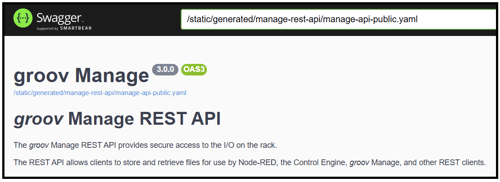
Instead of logging into each device individually to perform updates or pull configurations, you can now script those operations across your entire fleet. Firmware rollouts, configuration backups, and disaster recovery can all be automated via standard HTTPS calls.
Subject Alternative Name (SAN) Support
When generating web certificates, you can now include Subject Alternative Names. If your device is accessed by both hostname and static IP address, a single certificate now covers both without triggering browser warnings.

No more choosing between hostname and IP, and no more training your team to ignore certificate errors.
Ignition 8.3 Now Available on groov
This is a big one. Ignition 8.3 is Inductive Automation's first major platform release in years, and you can now optionally run it on groov EPIC and groov RIO MM2.

Ignition 8.3 brings a redesigned gateway interface, a new Historian engine powered by QuestDB, an Event Streams module for event-driven data pipelines, Git-based version control for projects, a built-in REST API, and long-term support (LTS) with five years of guaranteed updates.
Ignition Edge has also been updated to 8.3.3, and Cirrus Link modules are at 4.0.32 and 5.0.2. If you're building a Unified Namespace or using MQTT Sparkplug B, these updates keep your stack current. The legacy 8.1 branch is also updated to 8.1.52 for existing deployments.
Note: Once you select standard Ignition versus Ignition Edge, switching between them requires a full firmware reinstall. Make this decision before you deploy. And check out KB91207 if you’re an Ignition user coming from 3.x firmware.
The Bigger Picture
With 4.1.0, a single groov RIO or groov EPIC can segment networks without external hardware, integrate serial field devices without added licenses, and be managed programmatically as part of a fleet.
If you're trying to reduce the boxes and licenses between your field devices and the systems that use their data, this update is worth installing.



