
See what happens when you stop asking one platform to do everything.
You want the best controllers, I/O, SCADA software, MES, & cloud infrastructure—not whatever comes bundled together. The catch has always been getting them to talk. Mix vendors and you're staring at custom drivers, brittle middleware, and a cloud project that stalls because nothing speaks the same language.
But open standards changed that. When every layer speaks MQTT Sparkplug and OPC UA, best-of-breed pieces snap together simply instead of fighting each other. You pick the best tool for each job, and they still run as one system.
You don't have to take our word for it. Five companies built a factory to prove it, and you can see it right now.
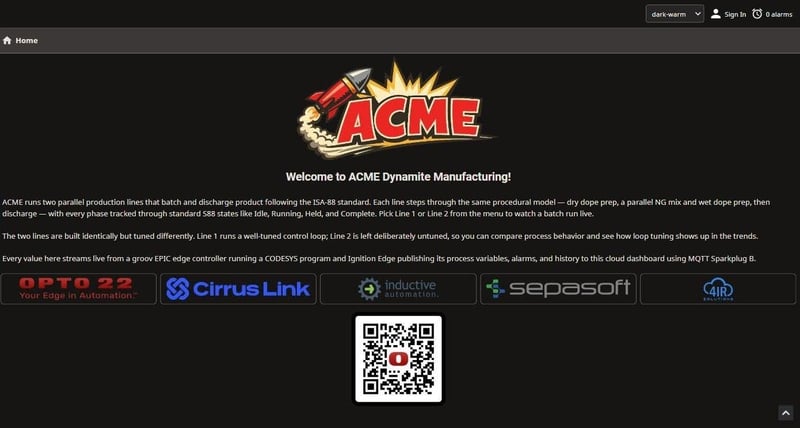
The ACME Dynamite demo from Automate 2026—five partners, one running system you can open in a browser.
Meet the ACME dynamite factory
ACME is fictional, but the process is real work. Two production lines batch and discharge product following the ISA-88 standard, each stepping through the same recipe: dry dope prep, a parallel NG mix and wet prep, then discharge. Pick a line and watch a batch run, start to finish.
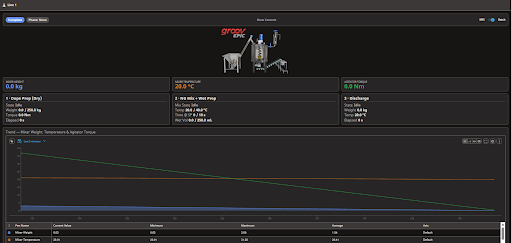
Each line runs an ISA-88 batch on a groov EPIC: dry dope prep, a parallel NG mix and wet prep, then discharge.
Five specialists, one system
Behind the factory is the real story: five best-of-breed systems, each doing the one thing it does best, but working together as one.
- groov EPIC and groov RIO from Opto 22 run the process itself. In this demo, a groov EPIC executes the ACME batch control in CODESYS, the real-time loops that actually run the lines. It talks to the rest of the plant through a range of industrial protocols in CODESYS and Ignition, including the PLCs and gear you already own. Built-in OPC UA and MQTT do the rest, getting data from where it is to where it needs to go.
- Cirrus Link provides the IIoT data backbone. Their Chariot broker and their MQTT Transmission, Engine, and Distributor modules for Ignition all speak Sparkplug, the common language the whole stack shares. Each value publishes on change, and any system that needs it subscribes, clean and report-by-exception.
- Ignition from Inductive Automation ties it together as the SCADA and development platform: visualization, alarms, and history.
- Sepasoft adds MES on top of Ignition—batch, tracking, and OEE—connecting the plant floor to your business systems following ISA-95.
- 4IR Solutions runs the cloud infrastructure: hosting, databases, backups, security, and secure remote access.
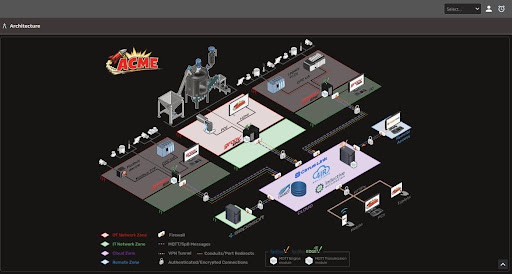
Best-of-breed from edge to cloud: groov control and I/O, MQTT Sparkplug transport, Ignition, Sepasoft MES, and 4IR's cloud.
Why better together beats all-in-one
None of this works because one company owns the whole stack. It works because these systems agree on open standards. You pick the best tool for each layer, scale or swap a piece without tearing out the rest, and skip the lock-in that comes with a single-vendor solution.
It's live, and some of it is real
Better yet, the Utilities screens aren’t part of the dynamite story at all. They stream live data from our own factory in Temecula, California: building power, air compressors, even a camera on the equipment. We run our own plant on the same gear we’re showing you.
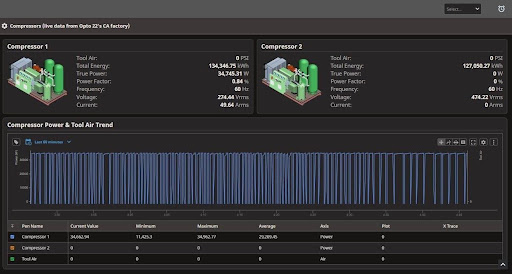
Not a mockup: the Utilities screens stream live power, energy, and air-system data from Opto 22's own plant.
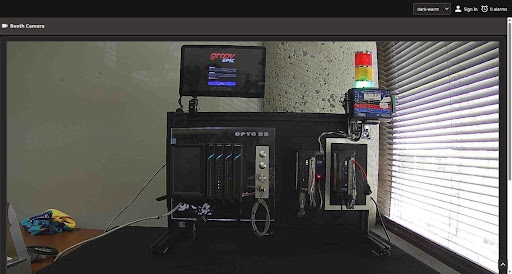
The real rig behind the demo—a groov EPIC and groov I/O running on the show floor.
Go see the better-together story for yourself. Explore the live ACME demo, open Line 1 and Line 2, and let the trends tell the story.

When you’re ready to build something like it, talk to an Opto 22 engineer. We’ll start from where you are.