
In 2012, explorer and filmmaker James Cameron did what no one had ever done before.
He piloted a one-man submersible to Challenger Deep at the bottom of the Mariana Trench, the lowest spot on earth, 6.8 miles (10.9 km) below sea level.

In 2012, explorer and filmmaker James Cameron did what no one had ever done before.
He piloted a one-man submersible to Challenger Deep at the bottom of the Mariana Trench, the lowest spot on earth, 6.8 miles (10.9 km) below sea level.
Topics: Videos, optonews, Deepsea Challenge, PACs, PAC Project, OptoNews 2016-02-17
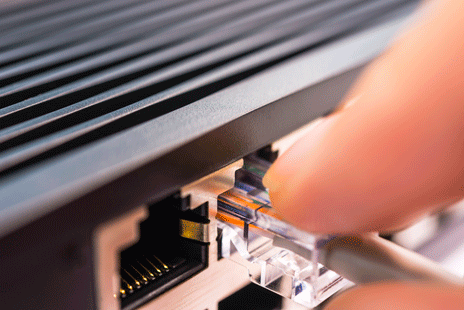
In my last blog post I talked about the TCP/IP model and why you should care about it. In a phrase: the Internet of Things (IoT).
With all the recent attention around the IoT, the Industrial Internet of Things (IIoT), and Industry 4.0, I’m sure you’re starting to realize that networking, Internet communication, and network security are going to be important in your job as an automation professional.
Topics: Internet of Things, IoT, Networking

OptoPartner Hy-Line Systems GmbH invites you to Embedded World 2016 in Nürnberg, Germany, next week from 23-25 February.
Embedded World brings together everything for embedded systems, from ASIC and FPGA design to programming to wireless, this year with an emphasis on the Internet of Things and security for embedded systems.
Topics: Internet of Things, IoT, Machine builder, optonews, OEM, Events & conferences, OptoNews 2016-02-17
When you're troubleshooting a network communications problem, it's often best to start from the bottom and work up.
Opto 22 engineer Matt Newton shows you how in his recent blog post about the TCP/IP Model: Troubleshooting the Link Layer.
Topics: Internet of Things, IoT, optonews, Networking, OptoNews 2016-02-17
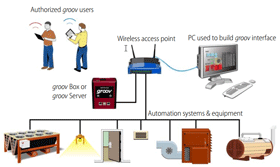
You already know that groov is the simple way to build your own mobile operator interface—your own mobile app—so you can securely monitor and control your systems and equipment from a smartphone or tablet.
With groov it really is easy to build your interface and control who can use it.
But there's one part that can be more complicated: setting up your network so you can access the data you need while maintaining security for your systems.
Topics: groov, Remote monitoring, Machine builder, optonews, OEM, Integrators, Networking, Building management, OptoNews 2016-02-17
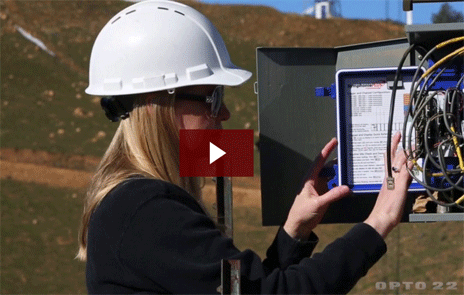
As "green" power production from sun and wind increases, electrical grids can find themselves with a big problem: too much electricity at once.
Solar and wind power generation work when the sun shines and the wind blows. But those hours are not necessarily when electrical demand is highest.
Topics: Energy management, Case studies, Videos, groov, Internet of Things, Remote monitoring, IoT, optonews, Integrators, OptoNews 2016-02-03
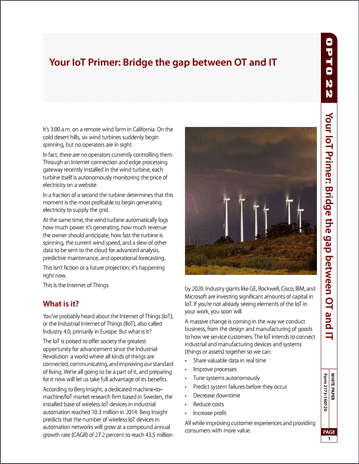
You've been hearing about the Internet of Things (IoT), also called Industry 4.0, the Industrial Internet of Things (IIoT), or machine-to-machine (M2M).
This new, free IoT Primer helps you understand how the IoT will affect your job and your life.
Topics: groov, Internet of Things, Remote monitoring, IoT, optonews, Integrators, OptoNews 2016-02-03

Join us next week in Anaheim, California, for the 2016 ATX West Expo.
The Expo showcases cutting-edge technology in manufacturing automation, and you can get a free pass.
Topics: groov, optonews, Events & conferences, OptoNews 2016-02-03
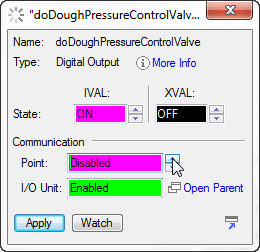
If you use PAC Control to develop your control programs, here's a question you may have: What the heck are IVAL and XVAL?
You see these terms in Simulation commands such as IVAL Set Analog Point, and you also see them when you inspect I/O points in Debug mode.
Topics: Tips, optonews, PACs, PAC Project, OptoNews 2016-02-03
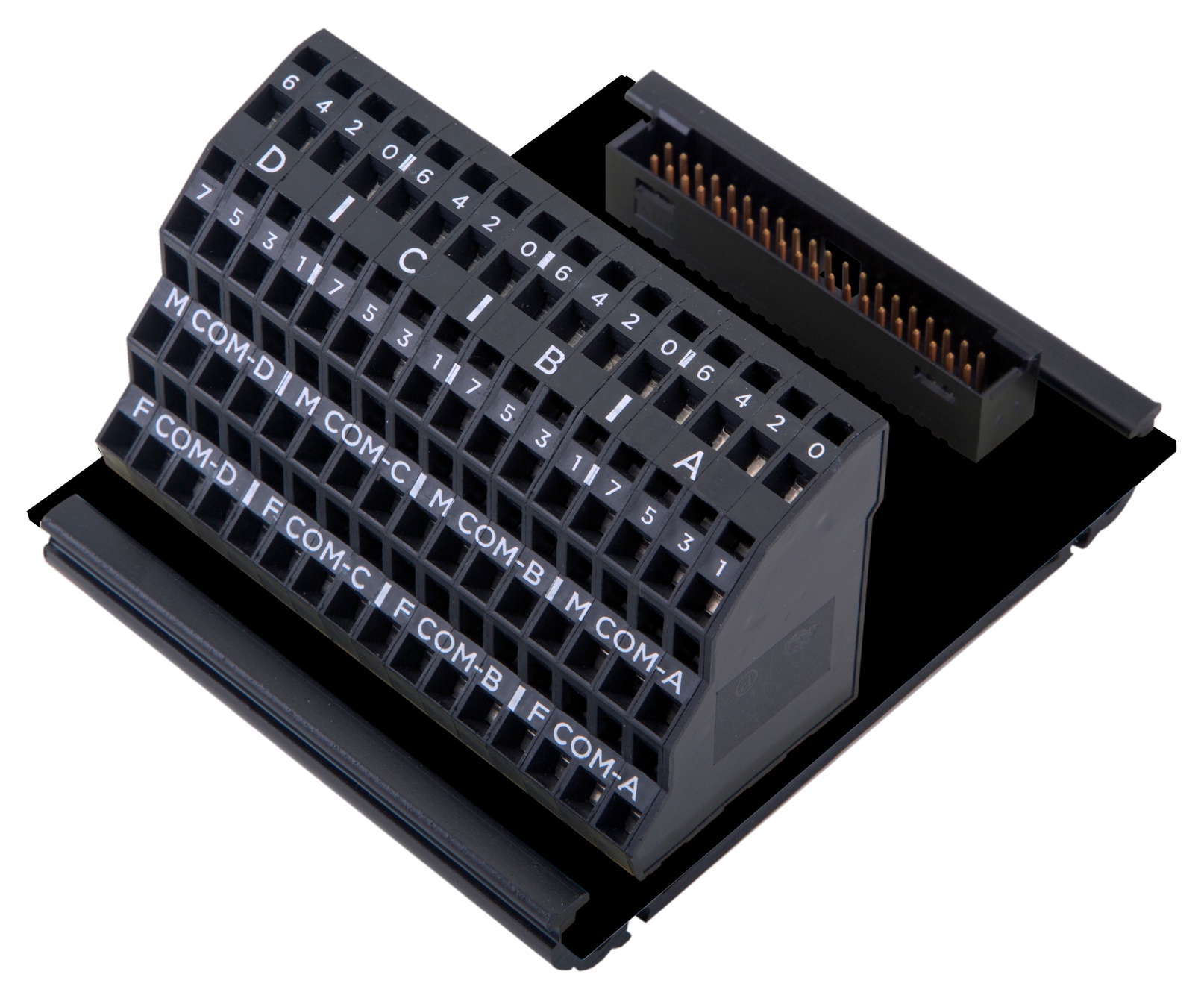
If you use high-density 32-point SNAP digital I/O modules, you'll be interested in our latest breakout board: the SNAP-UDC-HDB.
The small footprint of this new board makes it ideal for use in cramped areas. Just 3.32 x 3.95 x 2.27 inches high (8.43 x 10.03 x 5.77 cm), the SNAP-UDC-UDB fits in tight places but still gives you room to wire all 32 points to field devices.
Topics: Discrete control, Machine builder, optonews, New products, Integrators, I/O, OptoNews 2016-01-20